Your Shortcut to Superhost
Stop funding your investment property. Start getting paid by it.
A complete course that takes you from idea to your first booking. I built it doing exactly that, while raising a family and flying full time.
This is the blueprint. Every part in the order you actually do it, from working out whether the place stacks up to your first five star review, with nothing left for you to guess at in between.
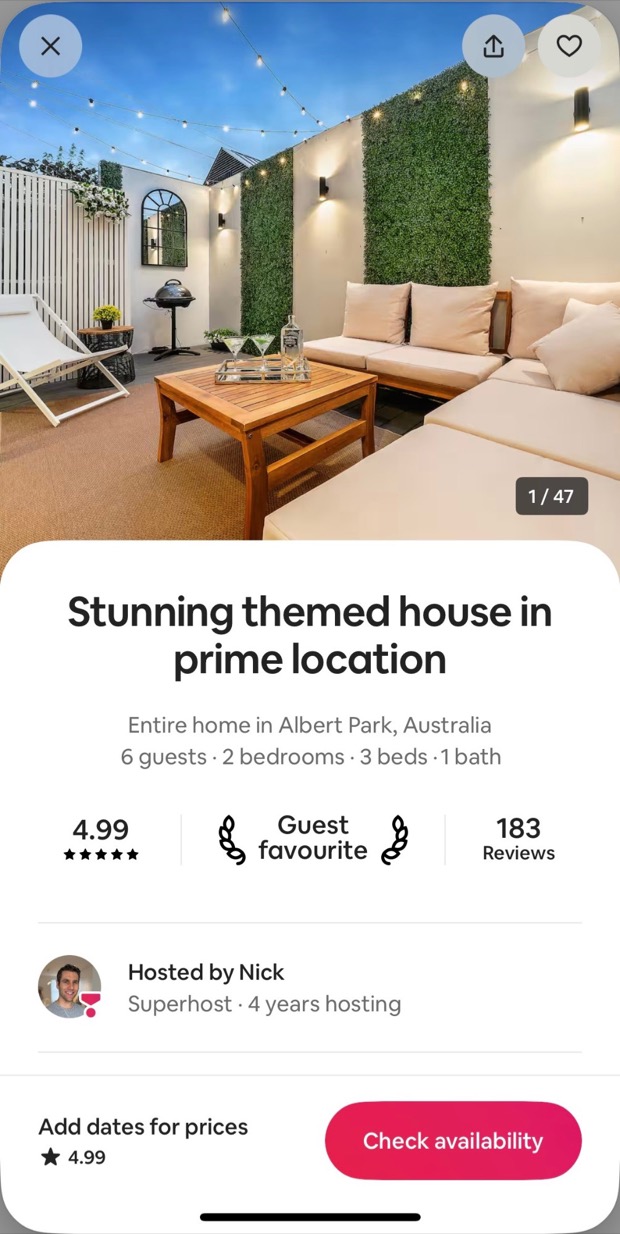
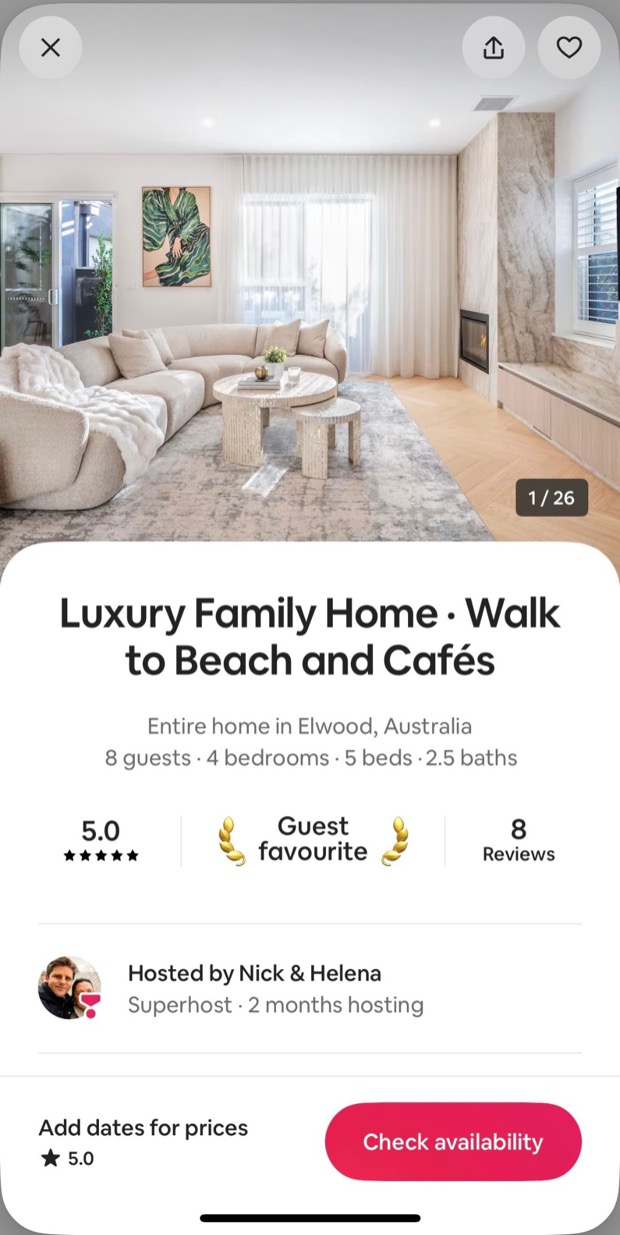
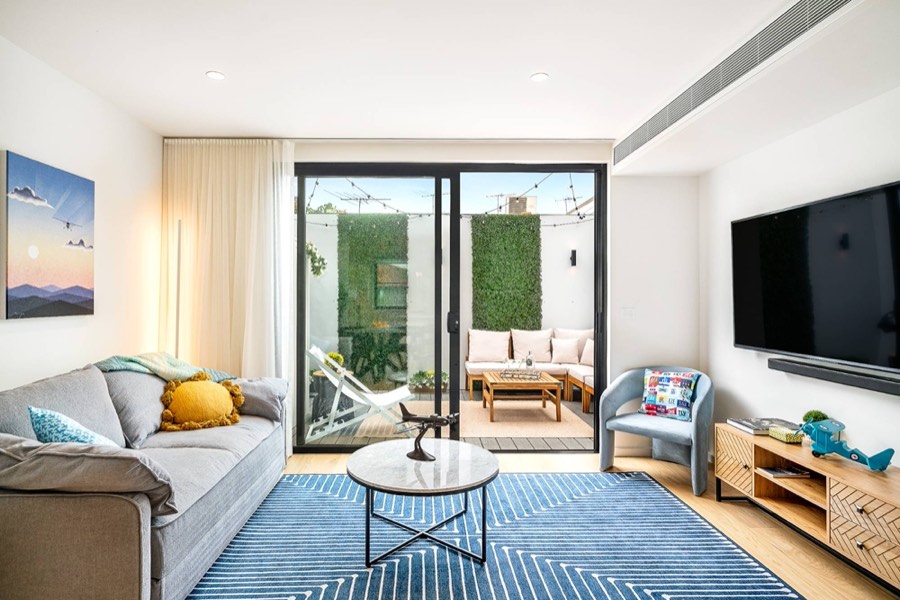
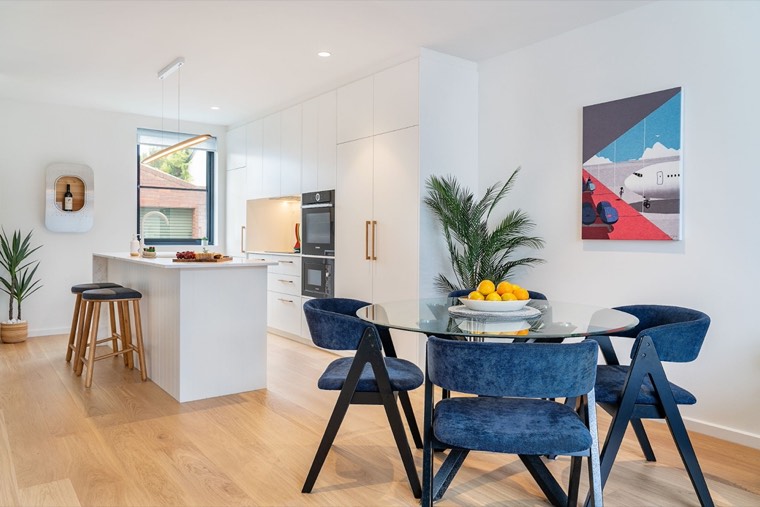
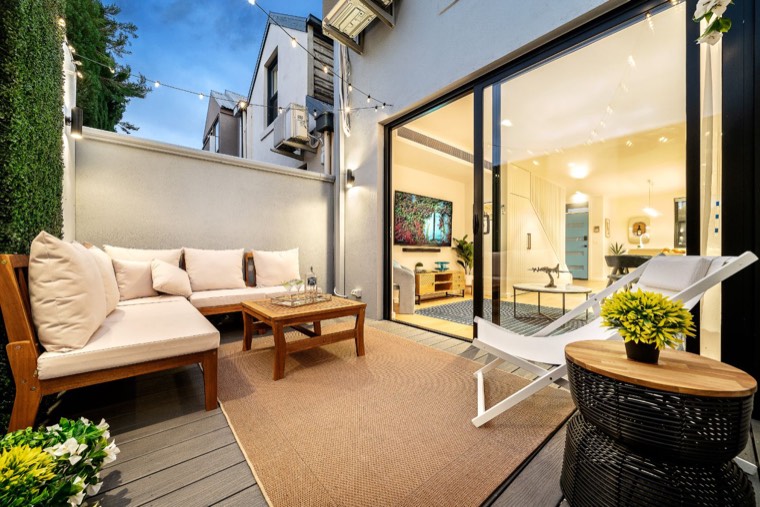
Some of the Airbnbs launched with this course.
You didn't buy property to feel restricted or financially squeezed. You bought it for freedom, options, and a sense of progress. At least, that was the idea.
But right now your investment property feels like it's doing the opposite. Each month, money leaves your account. The property doesn't pay you. And when you ask the bank about moving forward, the answer is usually no.
You were told this was normal. That negative gearing was smart. That capital growth would eventually make it all worthwhile. But living it feels very different from hearing it explained on paper. Instead of momentum, you feel pressure. Instead of confidence, you're carrying a quiet sense that something isn't adding up.
That gap between what you were promised and what you're experiencing is exhausting. And it's the reason you're here.
It affects your choices. It keeps you dependent on your income. It limits how the bank sees you. And it quietly stalls your ability to move forward, even when your property looks fine on paper.
Banks don't lend on potential or future hope. They lend on income. So even if your property grows in value, you're still waiting. Waiting to buy again. Waiting for the asset to justify itself. Waiting for the future you were told would eventually arrive.
That waiting is the real trap.
Before this, I co-founded and sold a financial education company. I was surrounded by smart people. Accountants, brokers, experts. The advice was always the same. Lose money now. Win later.
Then 2020 hit. My wife and I were both stood down as pilots. She was seven months pregnant. We were renting. And the bank pulled finance on an investment property after we'd already put down a six-figure deposit.
I remember walking along the beach on the phone to the broker, hands shaking, realising how quickly everything we'd worked for could disappear. That was the moment it clicked.
The "safe" strategy only works if nothing ever goes wrong. And something always does.
Like most people, I tried to patch the problem instead of fixing it. Traditional tenants. Side hustles. Other income ideas that were meant to be passive but weren't. None of it solved the real issue. If a property needs your salary to survive, it controls you.
What I wanted was simple. A property that paid for itself. Income that showed up whether I was working or not. Something that created breathing room instead of constant background stress. I wanted to open my banking app and feel relief, not pressure.
Every checklist, number and template in here comes out of listings that are live right now and being judged by real guests, not out of a course I wrote once and left alone.
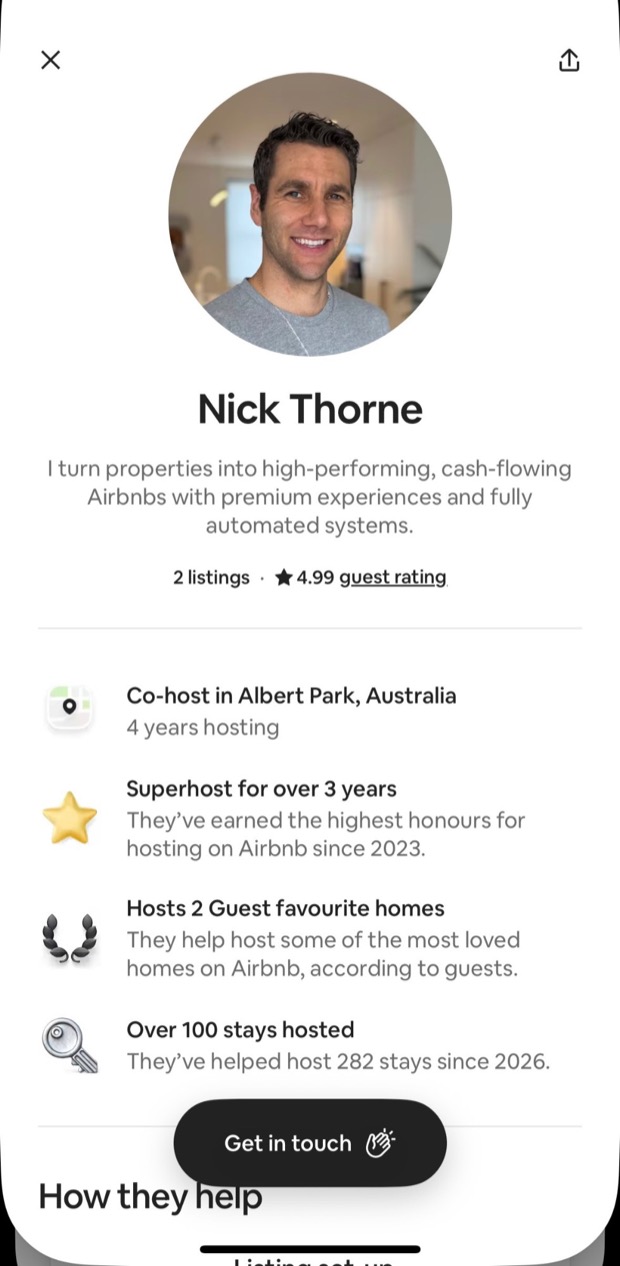
I am also a verified Airbnb Co-Host, which is an invite only program inside Airbnb. This is my profile.


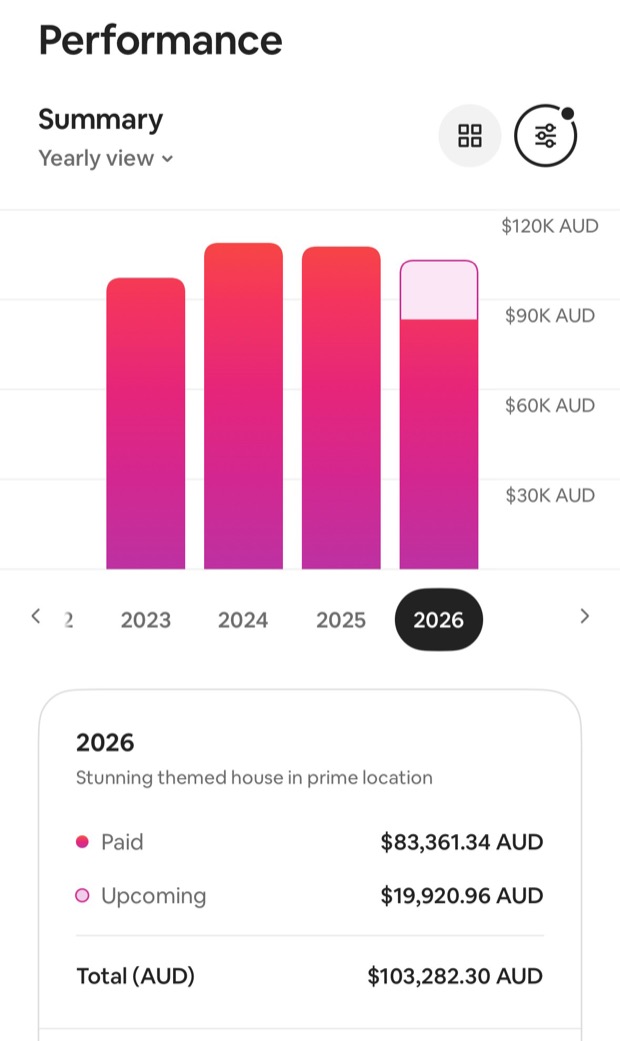
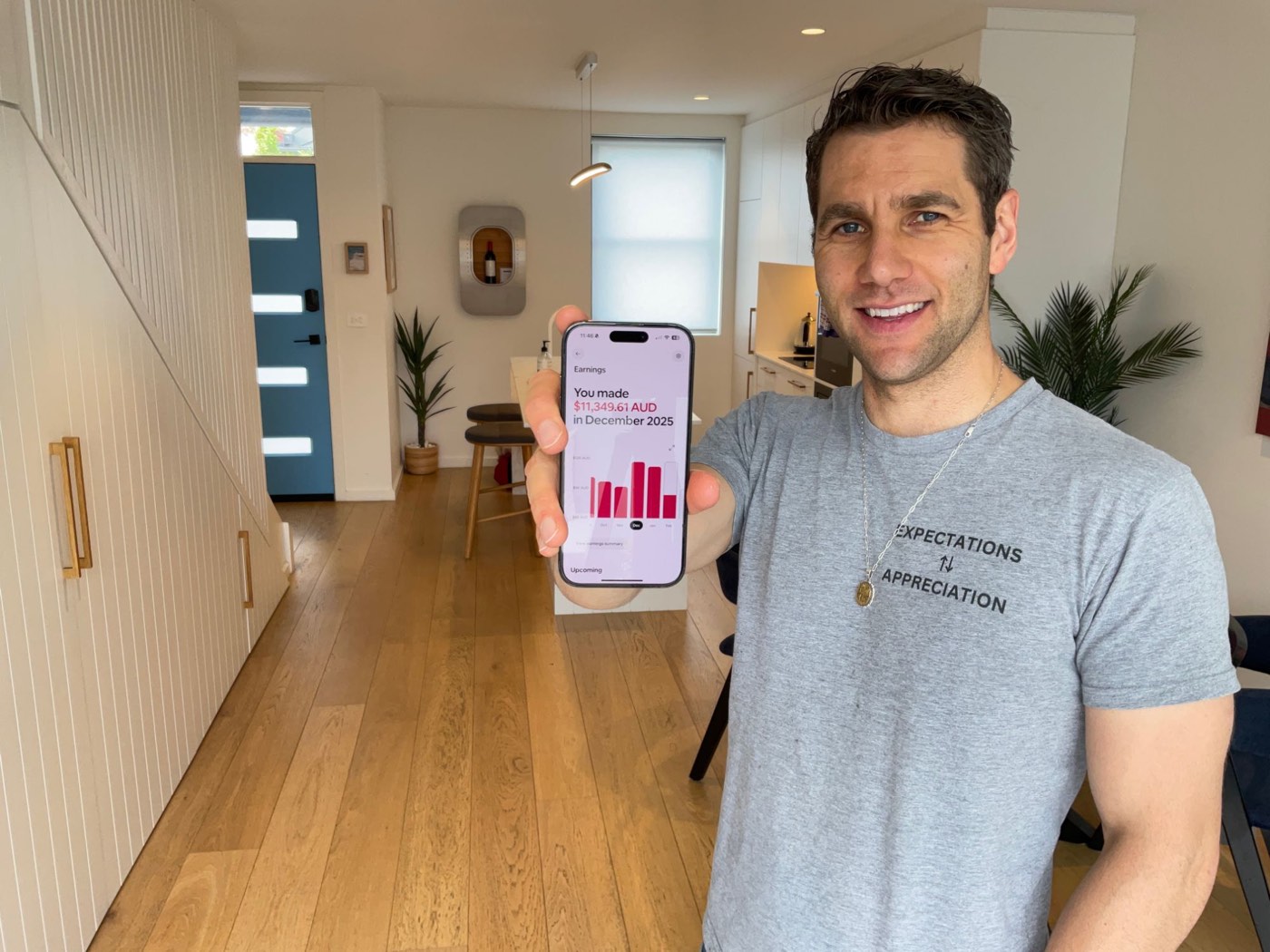
Almost anything can have a good opening month. New listings get a push, friends book, the photos are fresh. The ones still earning in year four are the ones that were set up properly at the start and then kept responsive to the market instead of left alone.
That is what Parts 11 through 15 are for: pricing, calendars, reviews, and what to do when a stay goes wrong. Here is the yearly view on my own listing, in Airbnb's own app.
It is how to launch a world class Airbnb in record time. It is for people who are done hoping capital growth will save them one day, and want the property to support their life now.
Here's the truth most people miss. Airbnb doesn't reward effort. It rewards structure.
When a property is built the wrong way, no amount of optimisation fixes it. When it's built correctly from the start, everything gets easier. Better guests. Better reviews. More consistent bookings. Less involvement.
This is the blueprint of systems you need to run a passive Airbnb. The systems do the work, which is why you do not have to hand a manager a cut of it once you know how to host properly. The cleaner who turns the place over. The messages that send themselves. The guidebook that answers the question before it gets asked. Get the structure right at the beginning and you do the foundations once, instead of fixing the same mistakes for years.
Fifteen parts, start to finish. Not theory. This is the sequence I follow on a real property, with the checklists, numbers and templates I use at each step.
Fifteen parts is the shape of it. This is the work those parts get done.
Most people start this feeling frustrated and boxed in. The property feels like a weight instead of an asset.
Airbnb has the potential to turn a property cash flow positive. It does not do that on its own, and it does not do it for every property, which is exactly why Part 1 is about working out whether yours stacks up before you spend a dollar.
My first property did 2.3 times what it was renting for once I moved it onto Airbnb with this system. That is my property and my numbers, not a prediction about yours, and the full breakdown is inside the course.
It is also possible to run one yourself, without a manager taking a cut, while working full time and with a family at home. That is the whole reason the systems in here exist.
What tends to change is how the thing runs:
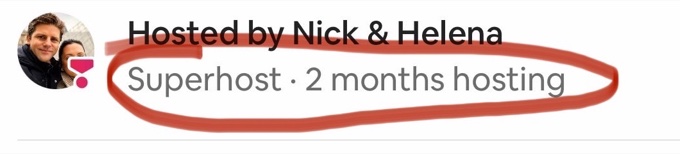
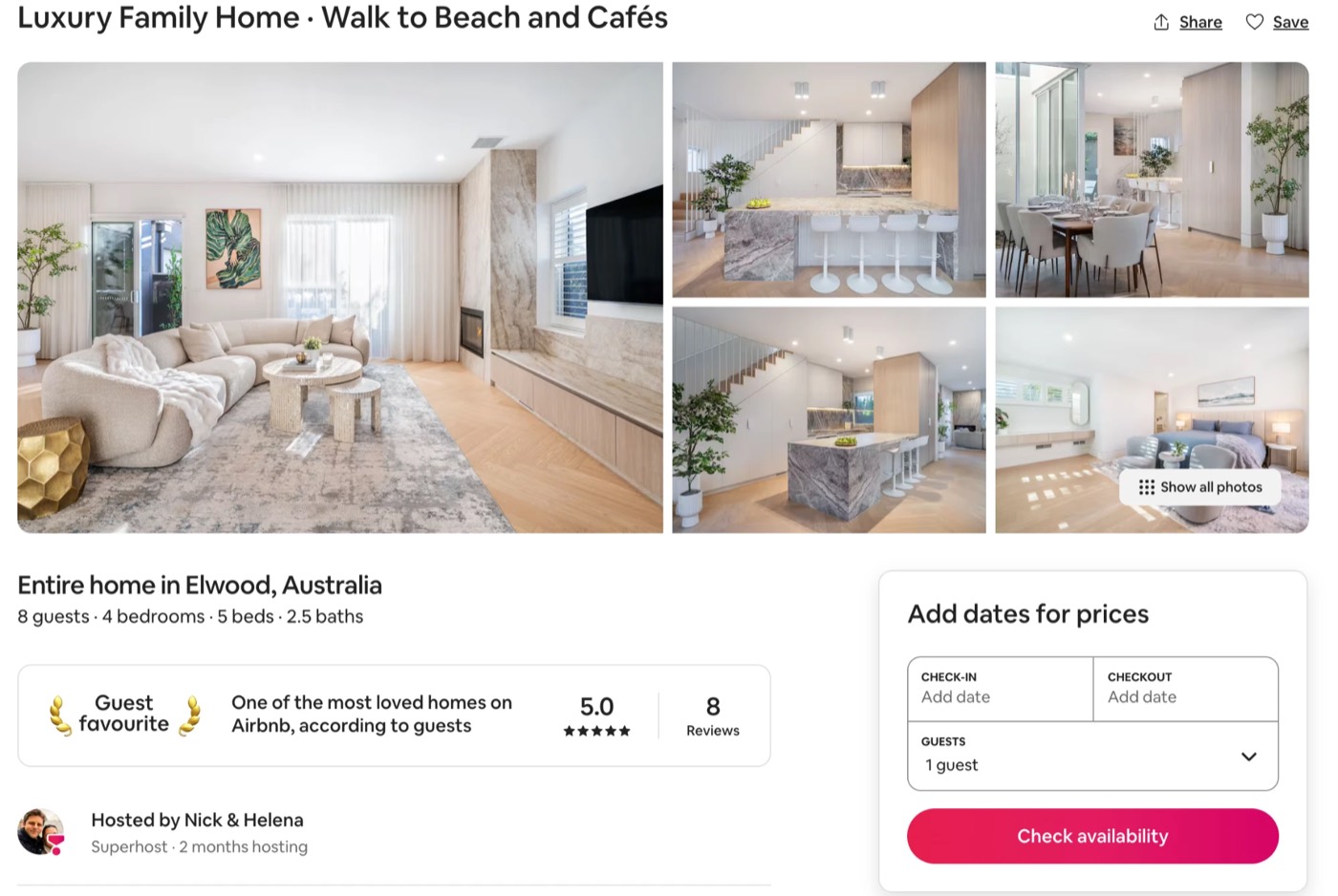
They had never hosted before. They went through the Accelerator, set the place up with it and opened the doors. Two months later Airbnb had given them Superhost, the Guest Favourite badge, and a place in the top 10% of homes.
Nick's Airbnb Accelerator was invaluable in helping us launch Horizon House. His step-by-step guidance, pricing strategies, guest guidebook and automated message templates saved us so much time and gave us confidence as first-time hosts. Nick is knowledgeable, genuinely lovely and always responsive. Since launching in July, Horizon House has become an Airbnb Guest Favourite and one of the top-performing homes in our area. We couldn't have achieved such a strong start without him and highly recommend the course.
That is the usual rate for full service Airbnb management. On a property turning over $100,000 a year, it is $20,000 to $25,000 gone before you see any of it. Then it goes again the next year, and the year after that.
This course is the other option. Set the place up properly, learn to host it properly, and run it yourself as passively as the systems allow. It costs less than one week of what a manager would have taken, and you pay it once.
Don't buy this if:
It's for professionals who want clarity before commitment, and who are willing to do things properly once so they don't keep fixing the same problems forever.
One payment, not a subscription. Lifetime access, including every future update.
Yes, but my honest view is only if you put in the effort to launch in the top 10%. Get there and you command the best price for your property, which gets you the best guests, which means the place gets looked after and you avoid most of the headaches hosts complain about.
I am not going to tell you it is easy. I will tell you it is repeatable. Put the effort in and follow the course and you give yourself the best chance at it. The thing working in your favour is that most hosts do not put that effort in, so Superhost and a listing that stands out are not as hard to reach as you would think once you are holding the blueprint.
No. Part 1 is feasibility: working out whether a property and an area actually stack up before you commit. Plenty of people go through it while deciding what to buy, which is the cheapest time to learn this.
No. The principles are the same anywhere. Part 1 is built to analyse any property in any market first, so you find out whether it works as an Airbnb before you spend anything on it.
You are the host, so the listing is yours. But almost none of it should reach you day to day. Parts 8, 9 and 12 are about building the systems that absorb it: a cleaner who runs the turnover, messages that send themselves at the right moment, and a guidebook that answers the questions before they are asked. The goal is a business that runs without you, not a weekend job you bought yourself.
Yes. Arbitrage is renting a property and listing it on Airbnb, and the principles for launching are identical. A guest does not care whether the place is rented or owned. The course is not about how to set arbitrage up, though. To me that is closer to taking on another job, or starting a property management business. But if I were going to do it, this is what I would use to set up each property.
Yes. Set up as many Airbnbs as you like from it.
The course itself is a few evenings. Doing it is the slower part. Furnishing, photos and listing take weeks on a real property. It's built to be worked through alongside the build, with checklists that remember where you got to.
No. These are real world principles that have been tried and tested, and a full step by step method to launch a passive and profitable Airbnb. Most advice online is a list of tips with no order. This is the actual order of operations, with the real numbers, the real shopping strategy, and the mistakes that cost money if you hit them in the wrong order.
You get instant access to the course. Your access never expires, and this is not a subscription. Check your email for the sign-in link, click it, and the course opens. There is no password to create.
Yes. What you see in the checkout above is the founding price while the first intake goes through, and it rises once that is done. Anyone who joins now keeps lifetime access at the price they paid.
Do it properly once, instead of fixing the same problems for years.
Get instant access